Eid
al-Adha is a significant annual Islamic observance for many Muslims in
Canada. It is also known as the Feast of Sacrifice or Festival of
Sacrifice as it commemorates Ibrahim’s (Abraham) willingness to
sacrifice his son to God.
Is Eid al-Adha a Public Holiday?
Eid al-Adha is not a public holiday. Businesses have normal opening hours.
Eid al-Adha is a happy occasion that Muslim families in Canada celebrate.
Eid al-Adha is celebrated in Muslim communities throughout Canada
around the 10th to the 13th days of the Islamic month of Dhu al-Hijjah
(or Dhul Hijja). It is a time marked by special prayers and many Muslims
gather for special prayer services. Many people also visit family and
friends, exchange greetings and gifts, and make donations to the poor
and needy. Eid al-Adha is also a time for forgiveness and compassion.
The Muslim Association of Canada (MAC) holds Eid festivals to celebrate Eid al-Fitr
and Eid al-Adha. The Eid Festivals offer celebrations including a
carnival of fun rides, shows, sport tournaments and various
international cuisines. Thousands of people, including key leaders,
often attend these events. Some politicians publicly announce their best
wishes to those celebrating Eid al-Adha. Festivities can last for up to
a few days.
Eid al-Adha follows from the annual pilgrimage to Mecca in Saudi
Arabia. This pilgrimage applies to Muslims worldwide, as they are
required to perform the Hajj once in their lives. Some Muslims in Canada
may travel to Mecca prior to Eid al-Adha to make this pilgrimage. Eid
al-Adha is known as the Feast of Sacrifice because it traditionally
includes the sacrifice of an animal permitted for food (eg. a lamb) as
an act of thanksgiving for God’s mercy. Some of the food is donated for
charitable purposes.
Public Life
Eid al-Adha is not a nationwide public holiday in Canada. However,
some Islamic organizations may be closed or offer a reduced level of
service and there may be some local traffic congestion around mosques
and venues where Eid al-Adha celebrations are held.
Background
Eid al-Adha, also known as the Feast of Sacrifice or Festival of
Sacrifice, commemorates accomplishment. Eid al-Adha also serves as a
reminder of when Ibrahim (Abraham) was willing to sacrifice his son to
God, according to Islamic belief.
Saint Jean Baptiste Day, held annually on June 24, is
the feast day of St John the Baptist, a Jewish preacher who baptized
Jesus in the River Jordan. It is a day of celebration in Quebec and
other areas of French Canada. Saint Jean Baptiste Day is also known as
"la Saint-Jean", "St John the Baptist Day", "Fête nationale du Québec"
and "Quebec's National Holiday".
Is St. Jean Baptiste Day a Public Holiday?
St.
Jean Baptiste Day is a public holiday in Quebec. It is a day off for
the general population, and schools and most businesses are closed.
In 2023, it falls on a Saturday, and some businesses may choose to follow Saturday opening hours.
Saint Jean Baptiste Day is often celebrated with a family barbecue.
Various events are organized on Saint Jean Baptiste Day. These range
from large scale public celebrations, such as rock and jazz concerts,
sports tournaments, parades and firework displays, to small family or
neighborhood happenings, such as yard sales, picnics, barbecues,
bonfires and children's entertainment. Many church bells ring in
celebration and public dances and fun fairs are held. Some events may be
held on the evening of June 23 and many are broadcast live on
television, radio or on the Internet. The celebrations are coordinated
by the Mouvement national des Québécoises et des Québécois.
Public Life
Saint Jean Baptiste Day is a public holiday in the Canadian province
of Quebec. Post offices and many stores are closed. Public transport
services run to a reduced schedule in some places or may not run at all
in other areas, such as the province's rural regions. If June 24 falls
on a Sunday, the same day is a paid day off for those who work on
Sunday. June 25 becomes a paid day off for workers who do not ordinarily
work on Sunday.
Background
Midsummer festivals, such as those linked with the June solstice,
were held in Europe for thousands of years. When people converted to
Christianity, elements of these festivals were combined with feast days
for Christian saints. In France, the celebrations around the feast day
of Saint John the Baptist were widely enjoyed and French colonists
introduced these traditions to North America.
The patriotic tone of the Saint Jean Baptiste Day celebrations began
in 1834. In that year Ludger Duvernay, an influential journalist,
visited the St Patrick's Day celebrations in Montreal, and was inspired
to create a similar event for French Canadians. In 1843, he established
the Saint Jean Baptiste Society to promote the celebration of Saint Jean
Baptiste Day. This organization was supported by the Catholic Church,
which saw it as a way to promote social and moral progress. In 1908 St
John the Baptist was designated as the patron Saint of Quebec,
re-enforcing the connection between Saint Jean Baptiste Day and
French-Canadian patriotism.
During and after World War I, Saint Jean Baptiste Day was barely
celebrated, but in 1925 Saint Jean Baptiste Day became a provincial
holiday in Quebec. After a period in the 1960s, when the structure of
society in Quebec changed greatly, this holiday became very political.
However, in 1977 Saint Jean Baptiste Day was recognized as the
'national' holiday of Quebec and the mood of the celebrations gradually
moved towards that of the secular celebrations in modern times.
Symbols
The fleurs-de-lis represents the flower of an iris or a lily. The
fleurs-de-lis is also associated with the Virgin Mary and her purity. It
was a symbol of French speaking people and their kings after King
Clovis I converted to Christianity in the year 493. It was taken from
the papal seal or coat-of-arms when the king converted, to symbolize the
strength and significance of the French nation in its union with the
Papal state. Quebec's flag is one-and-a half times as wide as it is high
and has a blue background. The background is divided into four
rectangles by a cross and each of the four rectangles contains a single
white fleurs-de-lis. The flag of Quebec and the fleurs-de-lis are
widespread symbols of Saint Jean Baptiste Day. Many people choose to
wear blue or white clothing to the celebrations.
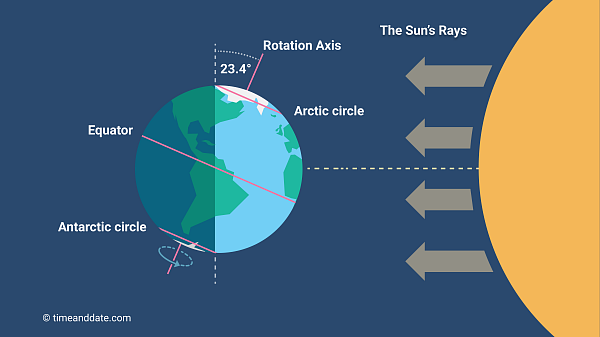
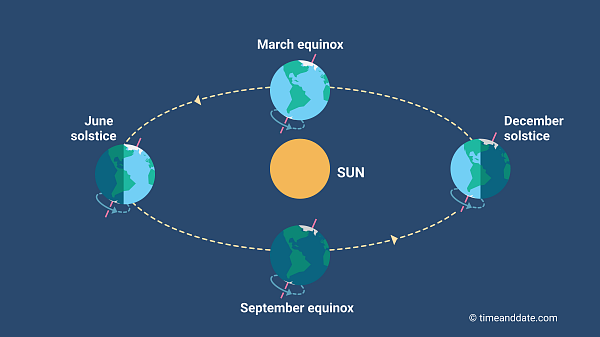
There are two solstices every year: one in June and one in December. The June solstice marks the longest day north of the equator and the shortest day in the south.
Position of Earth in relation to the Sun during the June solstice.
The June solstice is the moment the Sun is directly above the Tropic of Cancer in the Northern Hemisphere. This is the northernmost latitude it reaches during the year. After the solstice, it begins moving south again.
Since the Northern Hemisphere
is tilted toward the Sun in June, it receives more sunlight during the
course of a day. The North Pole's tilt toward the Sun is greatest at the
solstice, so this event marks the longest day of the year north of the equator.
This
effect is greatest in locations that are farther away from the equator.
In tropical areas, the longest day is just a little longer than 12
hours; in the temperate zone, it is significantly longer; and places
within the Arctic Circle experience Midnight Sun or polar day, when the Sun does not set at night.
Shortest Day in the South
Conversely, the day of the June solstice is the shortest day of the year in the Southern Hemisphere. Here, too, the effect is greater the farther a location is away from the equator.
Places within the Antarctic Circle experience polar night, when the Sun does not rise at all.
During a year, the subsolar point—the spot on the Earth's surface directly beneath the Sun—slowly moves along a north-south axis. Having reached its southernmost point at the December solstice, it stops and starts moving northward until it crosses the equator on the day of the March equinox.
At the June solstice, which marks the northernmost point of its
journey, it stops again to start its journey back toward the south.
This is how the solstices got their name: the term comes from the Latin words sol and sistere, meaning “Sun” and “to stand still”.
Initially,
the naming arose from observations of how the Sun’s apparent path
across the sky changes slightly from one day to the next, which is
caused by the same process as the subsolar point's movement described
above.
In the months leading up to the June solstice, the position of sunrise and sunset
creeps northward. On the day of the solstice, it reaches its
northernmost point. After that, the daily path of the Sun across the sky
begins to creep southward again.
Why Does the Sun Move North and South?
The subsolar point moves north and south during the year because the Earth’s axis is tilted at an angle of about 23.4° in relation to the ecliptic, an imaginary plane created by Earth’s path around the Sun. In June, the Northern Hemisphere is tilted toward the Sun, and the subsolar point is north of the equator. As the Earth travels toward the opposite side of its orbit, which it reaches in December, the Southern Hemisphere gradually receives more sunlight, and the subsolar point travels south.
The
longest day of the year is commonly associated with the earliest
sunrise and latest sunset of the year. However, in most locations, the earliest sunrise happens a few days before the solstice, while the latest sunset occurs some days after it. Find out why
The June Solstice in the Calendar
Even
though most people consider June 21 as the date of the June solstice,
it can happen anytime between June 20 and June 22, depending on the time
zone. June 22 solstices are rare—the last June 22 solstice took place
in 1975, and there won't be another one until 2203.
The date of the equinoxes and solstices varies because a year in our calendar does not exactly match the length of the tropical year—the time it takes the Earth to complete an orbit around the Sun.
Today's Gregorian calendar has 365 days in a common year and 366 days in a leap year. However, our planet takes about 365.242199 days to orbit the Sun. This means that the timing of the equinoxes and solstices slowly drifts apart from the Gregorian calendar, and the solstice happens about 6 hours later each year. Eventually, the accumulated lag becomes so large that it falls on the following date.
To realign the calendar with the tropical year, a leap day is introduced (nearly) every four years. When this happens, the equinox and solstice dates shift back to the earlier date again.
Other
factors influencing the timing of the equinoxes and solstices include
variations in the length of a tropical year and in the orbital and daily
rotational motion of the Earth, such as the “wobble” in the Earth's
axis (precession).
Canada’s
National Indigenous Peoples Day, formerly called National Aboriginal
Day, is annually held on June 21 to celebrate the unique heritage,
diverse cultures, and outstanding achievements of the nation’s
Aboriginal peoples. There are three Aboriginal groups in Canada – the
First Nations, Inuit, and Métis peoples.
Is National Indigenous Peoples Day a Public Holiday?
National
Indigenous Peoples Day 2023 is a local holiday in Northwest Territories
and Yukon and an observance in 11 provinces and territories.
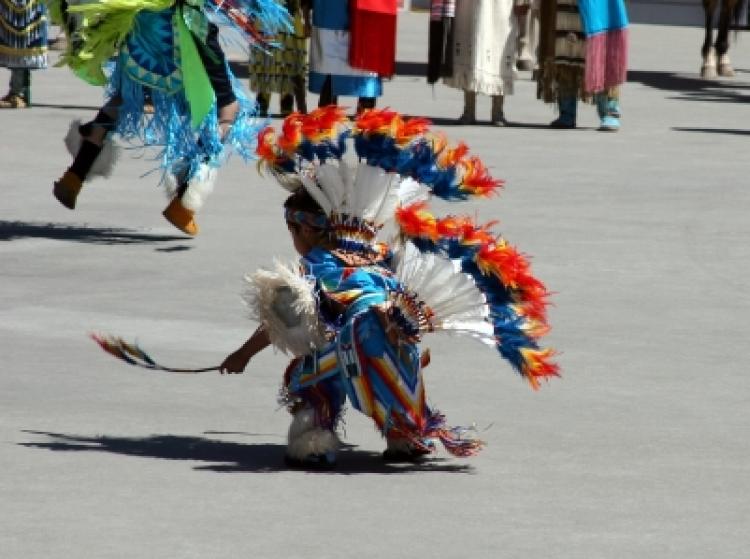
Traditional dancing, music, and festivals are part of the National Indigenous Peoples Day celebrations in Canada.
Canada’s National Indigenous Peoples Day gives many people the chance
to learn more about Aboriginal people and their contributions towards
the country’s development and progress. First Nations, Métis, and Inuit
people have the opportunity to showcase their cultures and achievements
throughout Canada on this day.
National Indigenous Peoples Day events are held in every region
across Canada. Activities and events include (but are not limited to):
Summer solstice festivals.
Barbecue fundraisers.
Social networking gatherings with traditional and contemporary music, dance and singing.
Sacred fire extinguishing ceremonies.
Traditional feasts, which may include fry bread and moose stew.
The cutting of a cake to honor National Indigenous Peoples Day.
National Indigenous Peoples Day in Canada gives people of all walks
of life the opportunity to celebrate and share knowledge about the
Aboriginal peoples’ values, customs, languages, and culture.
Public Life
National Indigenous Peoples Day is a paid holiday for employees in
the Yukon Territory and the Northwest Territories, except those in the
Northwest Territories Teachers' Association (NWTTA). It is not a
statutory holiday in other parts of Canada. Traffic and parking
conditions may be affected in areas where there are large celebrations
to commemorate the day.
Background
The Canadian Constitution recognizes three groups of Aboriginal
peoples: Indians (First Nations), Inuit, and Métis. Although these
groups share many similarities, they each have their own distinct
heritage, language, cultural practices, and spiritual beliefs.
Many people have pushed for a national day to recognize and celebrate
Canada’s Aboriginal peoples and cultures prior to 1996. For example, in
1982, the National Indian Brotherhood (now the Assembly of First
Nations) called for June 21 to be National Aboriginal Solidarity Day. In
1995, the Royal Commission on Aboriginal Peoples recommended a National
First Peoples Day to be designated. The Sacred Assembly, a national
conference of Aboriginal and non-Aboriginal people, called for a
national holiday to celebrate the contributions of Aboriginal peoples.
Canada’s governor general proclaimed the first National Aboriginal
Day in 1996. In cooperation with Aboriginal organizations, the Canadian
government chose June 21 for National Aboriginal Day because it was on
or near the June solstice.
Many of Canada’s Aboriginal peoples have celebrated their culture and
heritage on or near this day for many generations. The event provides an
opportunity to acknowledge the unique achievements of First Nations,
Métis, and Inuit in fields as diverse as agriculture, the environment,
business, and the arts.
In 2018, the day was officially renamed from National Aboriginal Day to National Indigenous Peoples Day.
Note: Any mention of summer in this article refers
to summer in the northern hemisphere. Moreover, timeanddate.com wishes
to thank Indian and Northern Affairs Canada for the background
information regarding National Indigenous Peoples Day.
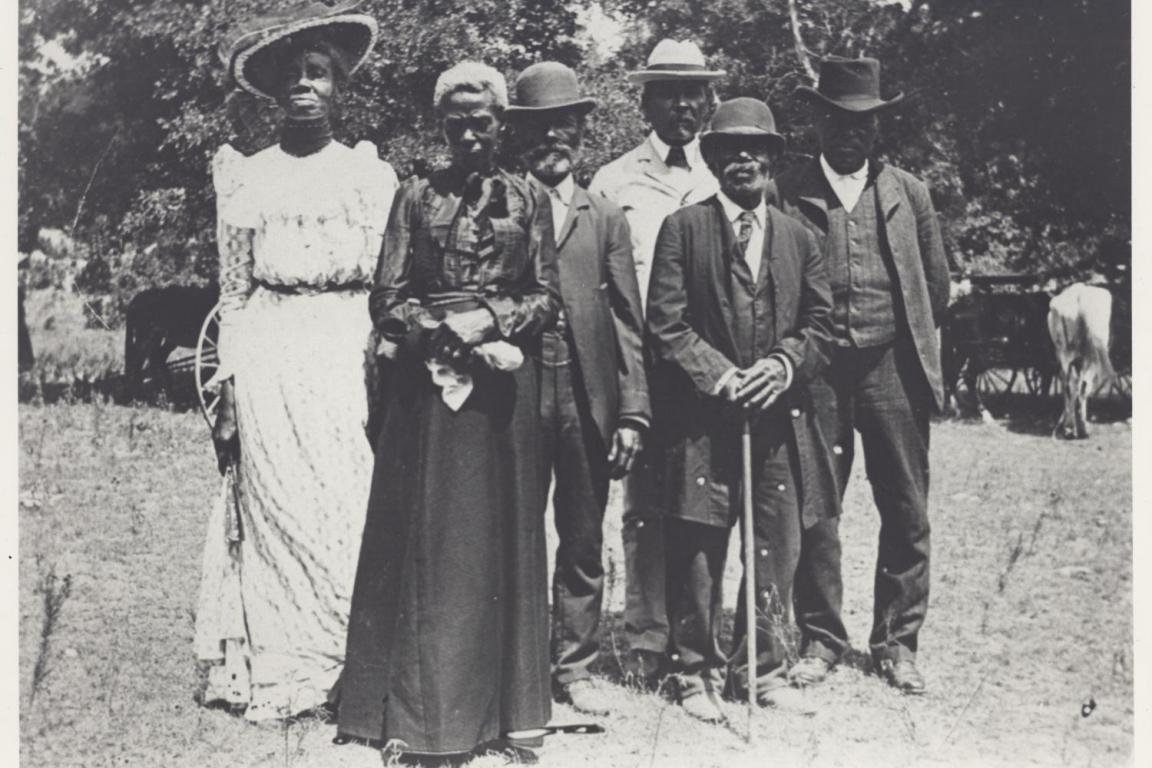
Emancipation Day celebration, June 19, 1900 held in "East
Woods" on East 24th Street in Austin. Credit: Austin History Center.
On “Freedom’s Eve,” or the eve of January 1, 1863, the first
Watch Night services took place. On that night, enslaved and free
African Americans gathered in churches and private homes all across the
country awaiting news that the Emancipation Proclamation had taken
effect. At the stroke of midnight, prayers were answered as all enslaved
people in Confederate States were declared legally free. Union
soldiers, many of whom were black, marched onto plantations and across
cities in the south reading small copies of the Emancipation
Proclamation spreading the news of freedom in Confederate States.
Only through the Thirteenth Amendment did emancipation end slavery throughout the United States.
But not everyone in Confederate territory would immediately be free.
Even though the Emancipation Proclamation was made effective in 1863, it
could not be implemented in places still under Confederate control. As a
result, in the westernmost Confederate state of Texas, enslaved people
would not be free until much later. Freedom finally came on June 19,
1865, when some 2,000 Union troops arrived in Galveston Bay, Texas. The
army announced that the more than 250,000 enslaved black people in the
state, were free by executive decree. This day came to be known as "Juneteenth," by the newly freed people in Texas.
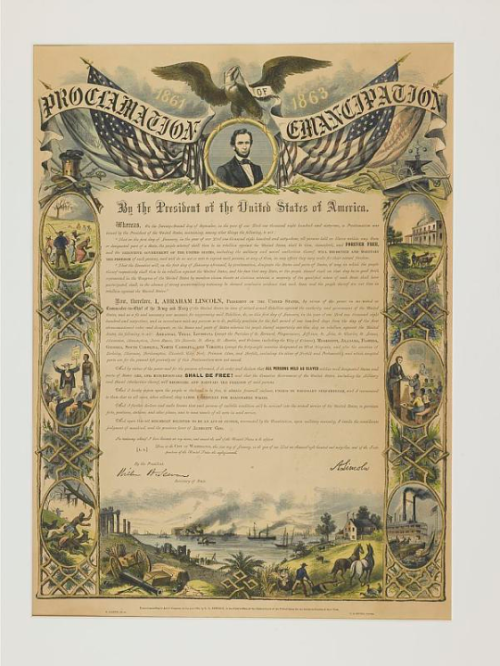
Publishers throughout the North responded to a demand for
copies of Lincoln’s proclamation and produced numerous decorative
versions, including this engraving by R. A. Dimmick in 1864.
National Museum of American History, gift of Ralph E. Becker
The post-emancipation period known
as Reconstruction (1865-1877) marked an era of great hope, uncertainty,
and struggle for the nation as a whole. Formerly enslaved people
immediately sought to reunify families, establish schools, run
for political office, push radical legislation and even sue slaveholders
for compensation. Given the 200+ years of enslavement, such changes
were nothing short of amazing. Not even a generation out of slavery,
African Americans were inspired and empowered to transform their lives
and their country.
Juneteenth marks our country’s second independence day. Although it
has long celebrated in the African American community, this monumental
event remains largely unknown to most Americans.
The historical legacy of Juneteenth shows the value of never giving
up hope in uncertain times. The National Museum of African American
History and Cultureis a community space where this spirit of
hope lives on. A place where historical events like Juneteenth are
shared and new stories with equal urgency are told.
The OESP is an Ontario Energy Board (OEB) program that lowers
electricity bills for low-income households. The OESP provides a monthly
on-bill credit to eligible customers based on household income and
household size. It is an application-based program.
Customers can apply online at Ontario Electricity Support.
You need to complete the online application, print and sign the consent
form and mail it to the address provided on the website. Alternatively,
a paper version of the application can be downloaded from the OESP
application website or can be mailed to applicants by the OESP Contact
Centre upon request. Customers unable to apply online can contact an
intake agency. Designated intake agencies can be searched by region on
the OESP application website.
Applications take about 6 to 8 weeks to process. Credits don’t take
effect until you submit all required information and your application is
processed. The program is available to all low-income customers who
have accounts with electricity distributors or unit sub-meter providers.
More information: Contact the OESP Contact Centre at 1-855-831-8151.
The Low-income Energy Assistance Program (LEAP) Emergency Financial
Assistance (EFA) is a year-round emergency financial assistance program
developed by the Ontario Energy Board to assist low-income energy
customers who may be experiencing difficulty paying current arrears. It
is a grant program for short-term financial emergencies. It is not
intended to provide regular or ongoing bill payment assistance.
The delivery of LEAP Emergency Financial Assistance relies heavily on
cooperation between utilities and social service agencies. It is
expected that as agencies screen and assess applicants in need, that
they may refer customers not only for Emergency Financial Assistance,
but also for customer service measures and/or conservation programs.
However, if no referrals are provided, we recommend that you contact the
utility and request what your options may be. You can get a one-time
annual payment of up to $500 in emergency assistance for your
electricity bill ($600 if your home is heated electrically) and $500 for
your natural gas bill.
The first step is to contact your electricity or natural gas
distributor or unit sub-metering provider. You will be referred to the
social service agency serving the area in which you reside (this agency
is called the “lead agency”). The lead agency, and not your utility
provider, is responsible for assessing whether you are eligible for LEAP
Emergency Financial Assistance. The lead agency will complete an
initial eligibility screening with you over the phone. If you meet the
initial criteria, you will then be requested to contact another local
social service agency in your area to complete a small application
process.
Ontario Energy and Property Tax Credit
This credit helps low- to moderate-income individuals with the sales
tax on energy and with property taxes. The credit is part of the Ontario
Trillium Benefit. The amounts are adjusted for inflation each year.
You may qualify for the credit if you resided in Ontario and:
rent or property tax for your principal residence was paid by or for you
you lived in a student residence
you lived in a long-term care home, or
you lived on a reserve and home energy costs were paid by or for you for your principal residence on the reserve
You apply for the credit by completing the ON-BEN form, which is part
of your personal income tax and benefit return (return). You may
qualify for this payment even if you do not owe income tax. The deadline
for filing returns is April 30 of each year. If you file late, your
payments may be delayed.
More information: For more information, please visit:
Special customer service rules for low-income customers The
OEB has special rules in place to ensure low-income customers are
treated fairly. These rules include the waiving of security deposits,
allowing longer payback periods under arrears payment plans, and
offering a longer grace period to customers before being disconnected.
For more information, contact your local utility provider or visit the
OEB website at https://www.oeb.ca/rates-and-your-bill/help-low-income-consumers/low-income-energy-assistance-program#special